Why I Wear a Mechanical Watch in a World of Smartwatches
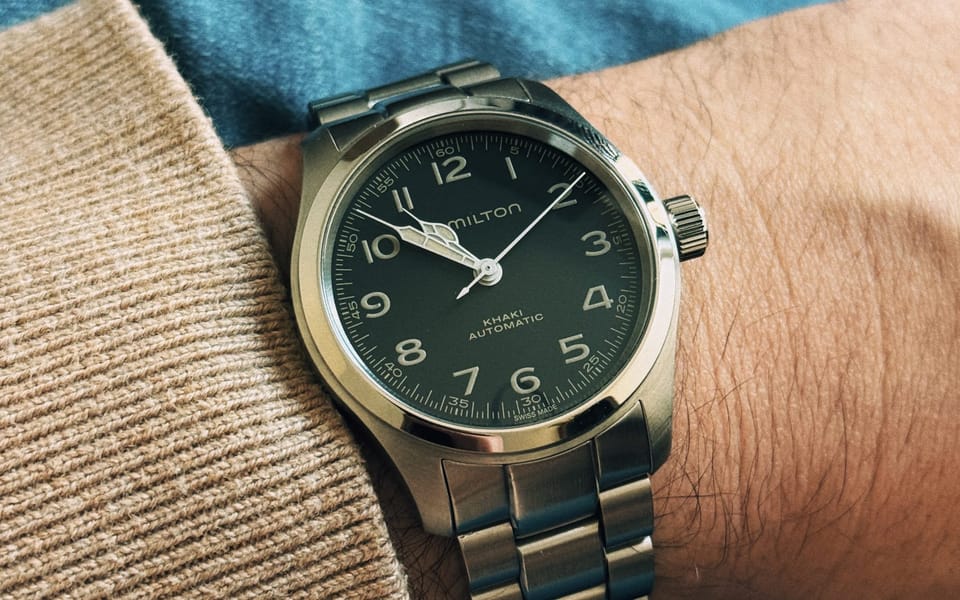
My watch tells me the time. That's it.
It doesn't notify me of anything. It doesn't track my steps or measure my sleep. It doesn't vibrate when someone messages me or glow when an email arrives. It has three hands, a dial, and a crown. It does one thing, and it does it for eighty hours on nothing but wound steel before it needs anything from me.
I want to explain why that feels like enough, and why it took me longer than it should have to realise it.
The problem with a computer on your wrist
Cal Newport opens Digital Minimalism with a question that sounds simple and isn't, did you choose this, or did it just accumulate?
Most people didn't decide to check their phone 150 times a day. They didn't sit down and conclude that their wrist was the ideal place to receive every notification their life generates. It happened incrementally, each feature added with a sensible justification, until the aggregate effect was a device that demands attention constantly and delivers something useful occasionally.
"The urge to check a notification is not a free choice. It's a response to a system that was engineered to produce exactly that response."

The smartwatch is the logical endpoint of that system. It moves the demand for attention from your pocket to your body. Now it's not just that the phone might light up somewhere nearby: the notification arrives on your skin. You feel it before you can decide whether to look.
I wore an Apple Watch for two years. It was genuinely useful in narrow ways. But I noticed something about myself during that time: I was never fully away from anything. A meeting, a meal, an evening at home with my family.
The wrist glance had become automatic, and automatic meant I wasn't actually choosing to check. The device had made that choice for me.
Tools should be tools
Newport's argument in Digital Minimalism isn't that technology is bad. It's that tools should serve specific purposes you've chosen, and when a tool starts shaping your behaviour rather than enabling it, something has gone wrong.
A hammer is a tool. You pick it up when you need it, you put it down when you don't. A smartwatch is closer to a presence, something that has opinions about when you should pay attention and acts on them without being asked.
I wanted a watch that was a tool again. Something that answered one question and then left me alone.
The Hamilton Murph 38mm does that. It's automatic, hand-wound, runs eighty hours on a full wind. The dial is clean enough that I can read it at a glance and put my wrist back down without being redirected anywhere.
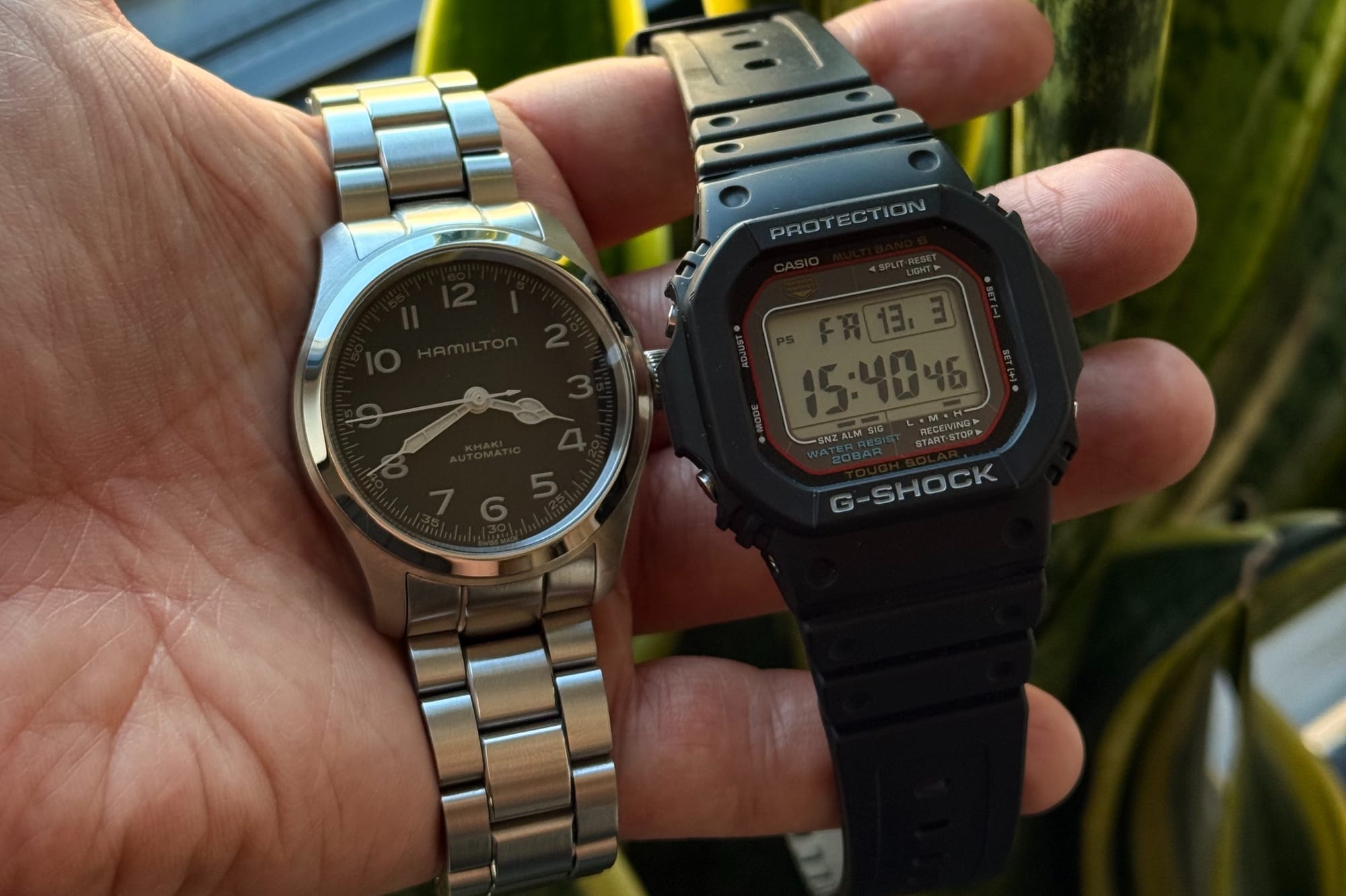
On days when I want something even simpler, the G-Shock 5610U or the Casio F91W go on the wrist. Both are purely functional. Neither has opinions.
None of them know what time zone my next meeting is in. That's fine. I can look that up when I need to.
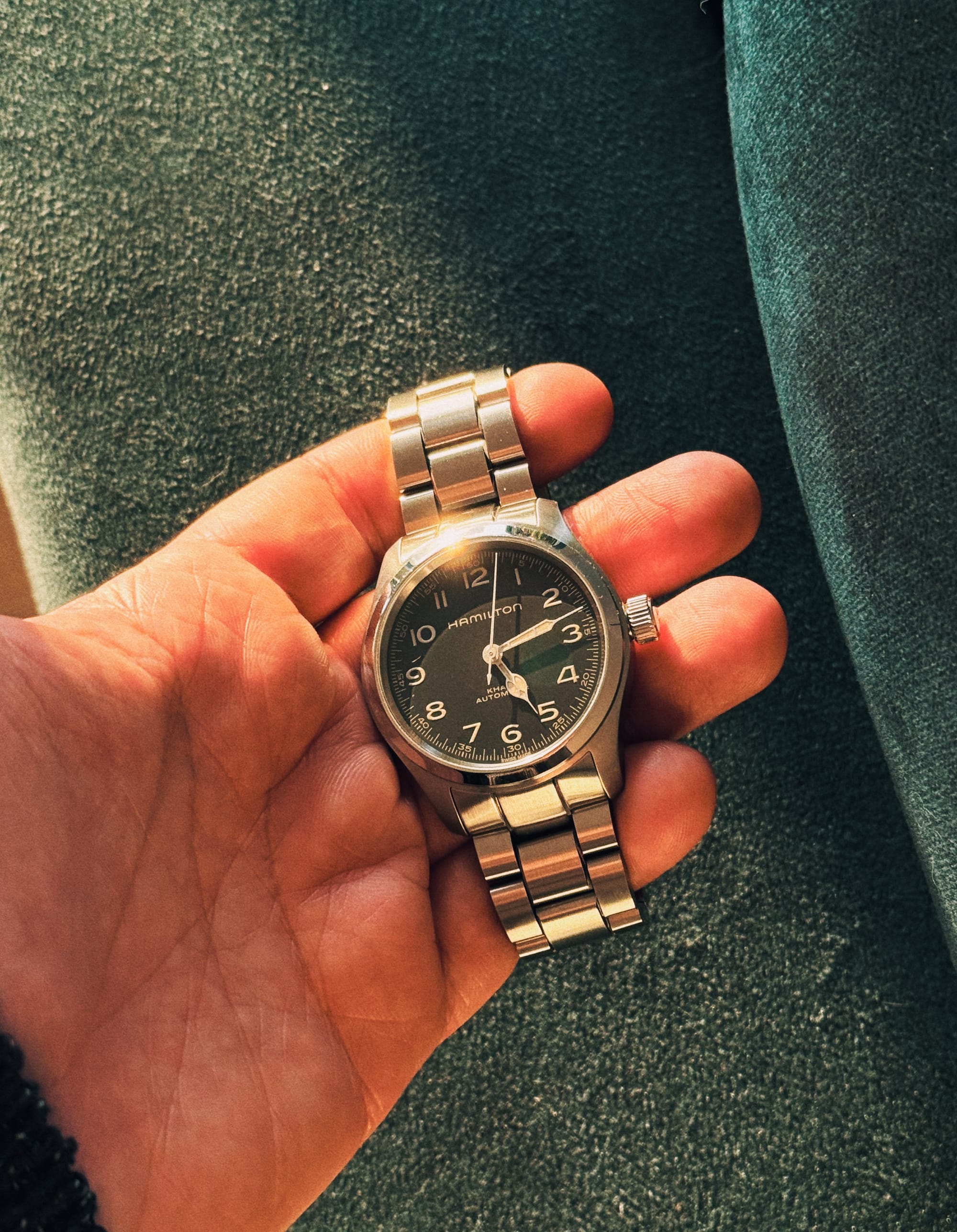
There's also something that happens when you wear a mechanical watch long enough. You start to notice it in a different way than you notice a smartwatch. The Hamilton has a presence that has nothing to do with its notifications, because it has no notifications. You notice the dial, the light on the hands, the fact that time is passing in a physical, measurable way. It sounds small. It isn't.
What you notice when nothing interrupts
The strangest thing about switching to a mechanical watch wasn't the absence of notifications. It was what filled the space.
I started noticing more. Not in a dramatic way, just the texture of what was actually in front of me rather than a reflexive check of what was happening elsewhere. A conversation without the half-second glance at my wrist every few minutes. An evening at home that felt like an evening at home rather than a slightly softer version of being at work.
My daughter is three and a half. The days when I'm genuinely present with her rather than physically there but mentally half-somewhere-else are measurable. She knows the difference. So do I.
Newport describes this quality as solitude: the ability to be alone with your own thoughts without constant input from outside. It doesn't require silence or isolation. It just requires not being perpetually interrupted. A watch that tells you the time and nothing else is one small part of creating that condition.
On not optimising everything
There's a version of the smartwatch argument I take seriously, it consolidates useful functions, reduces friction, gives you data about yourself. These are real benefits.
But the word "optimise" is doing a lot of work in that framing. Optimise toward what? More information? Faster responses? A more efficient use of attention?
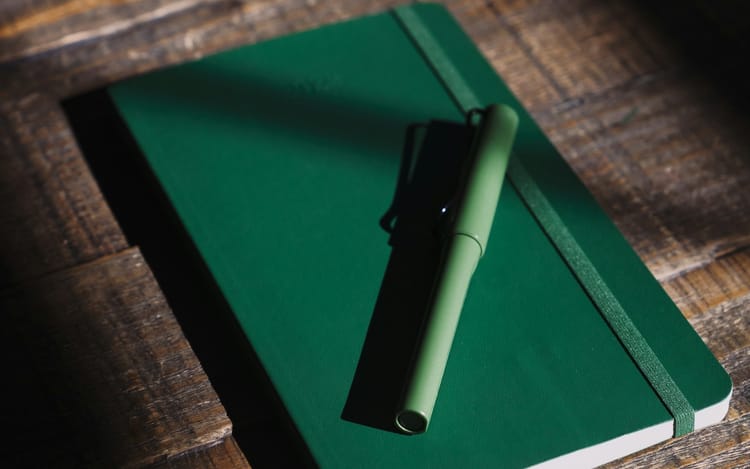
None of those are things I've decided I want more of. I want fewer things demanding my attention, handled more deliberately, with enough space in between to actually think. The mechanical watch is part of that. So is the paper journal, the film camera, the phone left in another room in the evening.
These aren't statements. They're just choices about what I want my attention to go toward, and what I'm willing to give up to protect that.
Seneca's point in On the Shortness of Life was that most people aren't short of time, they're short of ownership over it. The notifications, the reflexive checks, the always-on connectivity; these are ways of handing your time to other people's priorities without being asked.
A watch that only tells you the time gives that small piece of ownership back. It lets you decide when you need to know what time it is, rather than having your wrist decide what to show you.
That's a modest thing. But modest things, chosen deliberately, add up.
If you wear a smartwatch, try leaving it at home for one day this week. Not as a statement, just as an experiment. See what it feels like to have your wrist back.




Member discussion