What Analog Hobbies Teach You About Patience: On Film, Cooking, and the Satisfaction of Slow Things

There is a particular satisfaction that comes from things that cannot be rushed.
Not the satisfaction of finishing something, though that matters too. Something quieter than that. The satisfaction of being in the middle of a process that has its own pace, and learning to match it rather than fight it.
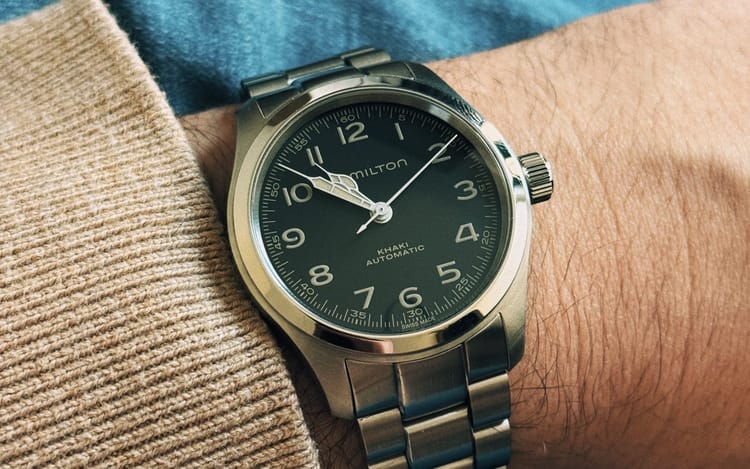
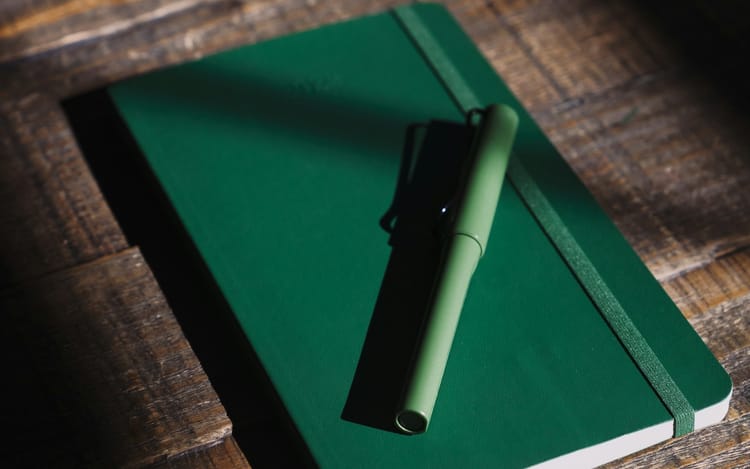
The analog hobbies I keep all share this quality. I've felt it developing a roll of film in my local lab and waiting for the results. I feel it on a Sunday morning when I'm cooking something that needs an hour and a half. I feel it when I wind the my watch after picking it from my watch box and hear the mechanism engage, knowing the watch will run for the next many hours on nothing but the energy I just gave it. And I feel it every morning when I open the bullet journal and migrate what didn't get done yesterday, asking myself honestly whether it still belongs.
None of these things are efficient. That's exactly the point.
Slowness as a practice, not a personality trait
Slow Productivity makes a case that the best work, across history, has almost always been produced at a natural pace. Cal Newport's examples are scientists, writers, and composers who worked on fewer things at once and went deep rather than wide. The results outlasted everything their busier contemporaries produced.
"Do fewer things. Work at a natural pace. Obsess over quality."
Analog hobbies teach the same thing through repetition, not argument. You cannot develop film faster by wanting it more. The chemistry works at its own rate. You cannot rush a good stock. You cannot skip the seasoning stage of a cast-iron pan. The process has terms, and you either accept them or you don't do the thing at all.
That acceptance is itself a practice. It's the same muscle you use when you decide not to fire off the first response in a difficult conversation, or when you sit with a hard decision for a day instead of resolving the discomfort immediately. Patience learned in one place transfers, quietly, to others.
What film photography actually teaches you

Digital photography gives you infinite attempts and immediate feedback. Film gives you thirty-six frames and nothing until the roll is developed.
That constraint changes how you look at things. Before pressing the shutter you pause, even briefly, in a way you wouldn't with a phone. You consider the light, the composition, whether this moment is worth one of your remaining exposures. The limitation creates attention.
Oliver Burkeman writes in Meditations for Mortals about the value of constraints as creative tools: finitude isn't the enemy of good work but often the condition of it. A finite number of frames is a deadline built into every roll. It makes you choose rather than spray and hope.
What you get back from the lab two weeks later (or few days) is also different from a phone photo. Not always technically better. But the delay creates a kind of distance that changes how you see the image. You remember making it differently. The waiting is part of the picture.
What cooking properly teaches you
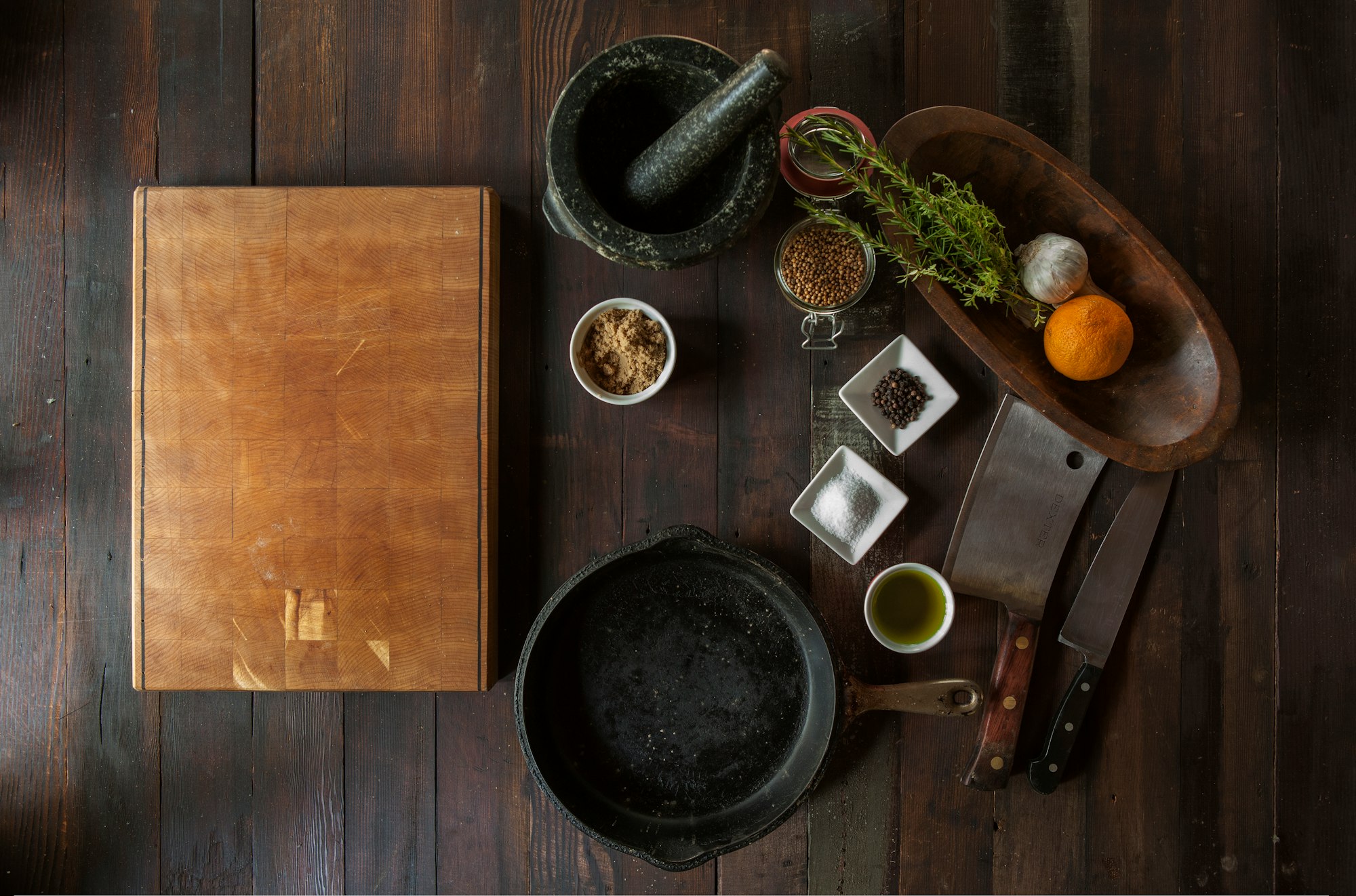
Cooking from scratch on a weekend is not about the food, or not only about the food.
It's about spending two hours doing something with your hands that produces a visible, edible result. No notifications. No emails. Just the smell of something developing in a pan and the small decisions that build toward a meal.
Marcus Aurelius wrote in Meditations about the importance of being fully present in whatever you are doing, and how rare that actually is. Cooking is one of the few activities that makes it almost compulsory. You cannot be distracted and cook well at the same time. The meal tells you.
The ritual matters as much as the result. The same goes for the journaling practice, the watch winding, the film roll. These are not activities you do while doing something else. They require you to be actually there.
What a mechanical watch teaches you
A watch that needs winding is a watch that asks something of you every day.
That small daily ritual sounds trivial. But it's a daily moment of contact with something physical, precise, and indifferent to your schedule. The movement doesn't care what's happening at work. It keeps time at its own rate.
Zegarki Mechaniczne by Jakub Szymaniak and Tomasz Miler is the closest thing to a complete text on the philosophy and mechanics of the mechanical watch, and what it conveys above all is that a mechanical watch is a collaboration between human craft and physical law. Dozens of parts, machined to tolerances measured in microns, working together to track something as abstract as time. There's no app update, no software, no battery. Just engineering.
Owning one teaches you to appreciate that kind of precision slowly, the same way you appreciate a well-seasoned pan or a developed roll of film. Not all at once. Over time, through use.
The common thread

Journaling, film photography, cooking, mechanical watches: what connects them isn't nostalgia or contrarianism. It's that they all resist the assumption that faster is better.
Each one has a process that cannot be optimised away. Each one requires presence rather than just attention. And each one produces something that a faster alternative doesn't: a physical record, a developed image, a meal made by hand, a watch that runs on nothing but wound steel.
"How much time he gains who does not look to see what his neighbour says or does or thinks, but only at what he himself is doing."
Aurelius again. The analog hobbies I keep are partly about slowing down. But more than that, they're about doing one thing at a time and being actually in it.
That turns out to be harder than it sounds, and more satisfying than almost anything else I do.
Pick one thing this week that has a pace you can't control and do it without trying to speed it up. Cook something that needs an hour. Finish a roll of film before buying another. Wind the watch. Write a page before you read back over it.
See what being in the middle of something feels like.



Member discussion