Reclaiming the Spark. On Burnout, Passion, and the Longer Road Back
I'm writing this from the middle of it, not from the other side.
That feels important to say upfront. Most articles about burnout are written in the past tense. "Here's what I went through, here's how I got out." This isn't that. I'm still figuring it out. And maybe that's exactly why I want to write it: because I know I'm not the only one sitting in this, and I think there's something honest worth sharing even before the story has a clean ending.
How passion becomes weight
In 2016, I was a software engineer at BAE Systems, leading a small blockchain innovation team. The technology was fringe, and most people around me couldn't understand why I cared so much about it. I cared because I couldn't stop. That curiosity felt effortless. It wasn't ambition, it was just following the pull.
That pull carried me further than I could have planned. From building smart contracts, to auditing them at CertiK, to joining Immunefi in 2021 as the fourth person on the triage team. Four years later, I'm Head of Triage, leading a team of eight, managing a service covering $190B in protected user funds. I've mediated disputes where the outcome determined whether millions of dollars went to the right place. I've hired people, developed them, watched them grow.
By any measure, the thing I chased because it fascinated me became a career. And then, as these things do, the career became a job.
I don't say that with bitterness. I'm proud of the work. But there's a particular exhaustion that comes when meaningful work accumulates weight over years. The stakes stop feeling abstract and start feeling very, very real. Security is relentless. The reports keep coming. The disputes are sometimes people's livelihoods. You carry that home. And somewhere along the way, the spark that used to fire automatically started to require effort to find.
"Even meaningful work can become draining if you never take a break from it."

The thing burnout steals that nobody names
We talk about burnout in terms of productivity. You can't focus, you can't start things, the inbox feels like a boulder. All of that is real.
But what burnout quietly takes is your sense of who you are when you're not working. Nobody really warns you about this part.
When what you do and who you are have been the same thing for years, burnout doesn't just leave you unproductive. It leaves you feeling hollow in a way that's harder to explain. You look at the things that used to energize you and feel nothing. The curiosity that once pulled you forward now feels like a task you're failing to perform. And then the anxious voice arrives. Was any of it real? Is this who I actually am, or just what I got good at?
I've sat with that question more than once lately. I don't have a clean answer. But I've come to think that the question itself isn't a crisis. It's an invitation.
What distance taught me
The first time I understood this, it wasn't because I read about it. It was because I started picking up a camera.
Not a digital one. An analog one. Film photography, which is slower, more deliberate, and completely unforgiving in the best possible way. You can't undo a shot. You can't scroll back. You have to be present, and then you have to wait. That waiting, I discovered, was doing something for me that nothing in my work could.
Then came mechanical watches. There's a whole world in there. The history, the craft, the way a movement works like an impossibly small piece of engineering that someone thought about for years. I fell deep into it without planning to. Then cooking properly for my family on weekends, not a quick meal but the kind where you're chopping things slowly, tasting as you go, fully in the room for a few hours while the notifications disappear. Repairing old consoles. And of course, writing this blog.

And journaling.
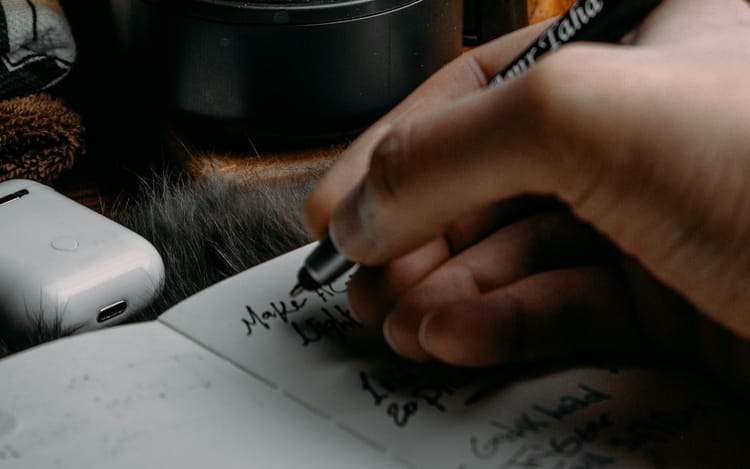
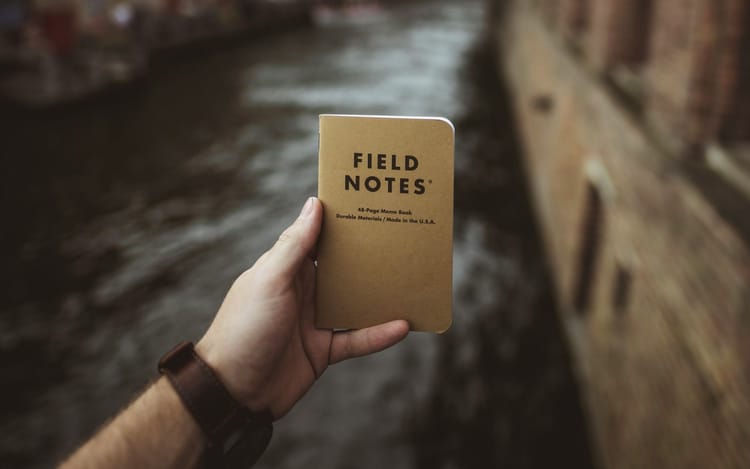
Journaling might be the one that's changed me the most, even though it's the hardest to explain to someone who hasn't tried it. There's nothing productive about it. You sit down, you open a notebook, and you write whatever is actually in your head. Not the polished version, not the version you'd say out loud, just the real mess of it. Today I feel... I don't know what I feel. I'm tired in a way I can't name. I keep thinking about... And then something happens. The thought that was a fog starts to have edges. You see patterns you hadn't noticed. You realize what's been draining you. Sometimes you realize what you actually want.
I've written before about journaling, and I keep coming back to it because it keeps coming back to me. It's the one habit that costs nothing, asks nothing, and somehow returns more than almost anything else I do for myself. If you're burned out and you haven't tried it yet, I'd start there before anything else.

"Work is not just about doing more. It's about doing what matters and leaving space for what makes you human." — Cal Newport, Slow Productivity
None of what I listed above is productive. None of it scales. Nobody is waiting on a deliverable. And that, I eventually understood, was exactly the point. If your hobby becomes your job, you can't let it stay your only hobby. I learned this the hard way. When blockchain was both what I did at work and what I thought about in my free time, I was mentally on the clock 24 hours a day. That isn't sustainable, especially when you have a family you want to be fully present for, not a version of yourself that's still half somewhere else.
The honest part. I'm still exploring.
Here's where I have to be honest with you, because this post would ring false if I wrapped it up too neatly.
I haven't figured this out. I'm still in the middle of discovering what gives me that spark right now, at this point in a career that looks very different from where it started. Some of the hobbies I listed above I've had for years. But some of what's pulling at me lately is newer and less defined, and I'm not sure yet what to do with it.
I've been thinking about starting an Instagram account just for my watch photography. Nothing elaborate, just a place to share what I see when I look through the viewfinder at a dial, a case, the way light catches a rotor. I don't know if I will. I don't know if anyone would care, or if that's even the point. But the thought keeps coming back, which I've learned to take seriously.
I've been thinking about doing something more with journaling. Not just keeping it to myself, but sharing more of the process, the prompts that help, the way it feels on the days when it clicks and the days when it doesn't. Maybe that's just more writing. Maybe it's something different. I don't know yet.

And I notice that I don't know yet feels important to sit with, rather than resolve. Part of what burnout does is make you feel like you need to have the answer already. Like not knowing what your next passion is means you've lost something permanently. I don't think that's true. I think sometimes the honest position is that I'm curious about a few things, I'm not sure where they'll go, and I'm giving myself permission to find out slowly.
Those small pulls are worth following. Not because they'll become your next great passion overnight, but because they're the thread back to yourself. Curiosity doesn't need a destination. It just needs permission.
When something surfaces, and something usually does if you stop forcing it, start smaller than feels meaningful. One afternoon. One roll of film. One meal you haven't tried before. One page in a notebook. The goal isn't to build something or prove something. The goal is just to remember what it feels like to do something for no reason other than that you want to.
I started this blog for exactly that reason. Not with a plan, not with a content strategy, not even with a clear sense of who I was writing for. I just wanted to write. And that wanting, it turned out, was enough to start.
"How we spend our days is how we spend our lives."
On rest, which is harder than it sounds

I've resisted rest my whole career. There was always more to do. Always someone pushing forward. Always a dispute that needed resolving, a hire that needed making. The guilt of stopping felt productive, like at least I was aware of what I wasn't doing.
But I've learned, slowly and not easily, that this is a trap. You can't recover while still running. You can't find the spark when you're running on empty. The ideas don't come, the curiosity doesn't fire, and the things you used to love stay flat, not because they've changed, but because you're too depleted to receive them.
Real rest isn't waiting for motivation while you do nothing. It's giving yourself time that isn't in service of anything else. A walk without headphones. A book with no agenda. Cooking something slowly. Sitting outside and doing nothing in particular. These aren't wasted hours. They're where the spark rebuilds itself, without your help, without your interference.
"The things you think about determine the quality of your mind. Your soul takes on the color of your thoughts." — Marcus Aurelius, Meditations
This isn't a solved problem
I said at the beginning that I'm writing this from the middle, not the other side. I mean it.
I'm still figuring out what the next version of this looks like, what the spark looks like now, at this point in a career that has grown in ways I couldn't have predicted. I don't have a tidy ending. I have analog photographs I'm happy with. A few watches I love. A journal I return to. A blog I keep showing up for. A family I want to be fully present for. And a slowly growing sense that the curiosity that got me here is still in there somewhere, just a little buried, waiting for some space.

If you're in something similar, I don't want to offer you a five-step plan. I want to offer you this: the burnout you're feeling isn't a verdict on who you are or how much you care. It's a signal that you've been giving a lot, and you need to receive something back. The flatness isn't permanent. The spark doesn't disappear. It just needs you to stop demanding it perform on command.
Do things for yourself. Follow the small pull. Rest without guilt. Let the thing you love breathe at a distance for a while.
And if you need a reason to start, mine arrived before I was ready. Within the next week, my second child will be born. I want to be fully present for him from the very first day. Not a version of myself that's half somewhere else, still processing a dispute or mentally triaging a report. Someone he can rely on. Someone my whole family can rely on. That's not a small thing to want. And it's been the clearest reminder I've had in a long time that the work of finding yourself again isn't selfish. It's necessary.
The way back isn't always straight. But it's there.
If you're still in the early stages of recognizing what burnout actually is, I wrote about that first, and about the small steps that help, in Understanding Burnout and Finding Small Ways Forward. This post picks up where that one left off.
See You Soon!