Closing the Laptop Isn't Enough. Here's How to Properly End the Workday

There's a version of you that finishes work at six, closes the laptop, and walks into the evening as a completely different person. Present. Available. Actually there.
I've met that version of myself maybe three times.
Most evenings, I close the laptop and the work follows me. Not physically. The desk stays in the other room. But the conversation I didn't finish, the thing I said wrong in the afternoon, the task I pushed to tomorrow, those come with me. Into the kitchen. Into bathtime. Into whatever's left of the evening before my daughter is asleep and my wife and I can finally sit down.
It took me longer than I'd like to admit to realise this wasn't a discipline problem. It was a transition problem. Nobody taught me how to properly end a workday. I knew how to start one.
Why the Brain Doesn't Switch Off Automatically
The workday doesn't end because you've stopped typing. It ends when your brain receives a clear signal that it's over. And for most of us in knowledge work, that signal never comes.
There's no bell. No forty-minute commute where you decompress on a train and arrive home as a different person. No physical separation between the place where you work and the place where you live. You're just not at your desk anymore, which, it turns out, isn't the same thing as being done.
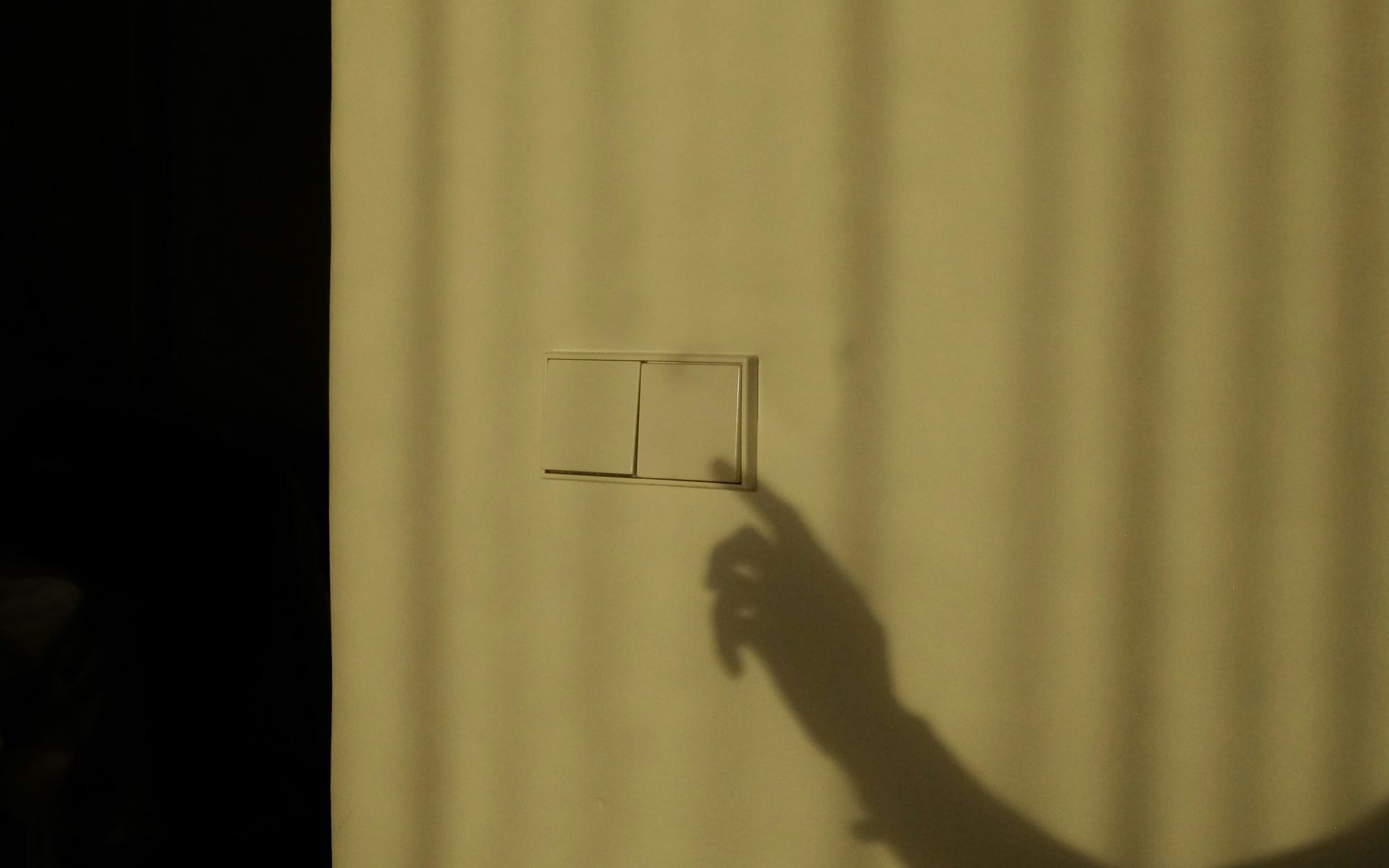
The brain's default, in the absence of a clear ending, is to keep open loops open. Open loops are uncomfortable. Your mind wants to close them, and if you won't let it do that by finishing the work, it will keep rehearsing them instead. That's the low hum you can't quite turn off. That's why you're still thinking about the Slack message you forgot to send while your daughter is telling you about something that mattered to her.
What you need is a ritual that closes the loop deliberately. Something that tells your brain we're done for today. Not forever. Just done.
What a Shutdown Ritual Actually Is
The idea is simple. You create a short, repeatable sequence that signals end of work to your brain the same way a threshold or a commute once did. It works because ritual is how humans have always marked transitions. You're not hacking your brain. You're doing something very old.
My version takes about fifteen minutes, and I do it at the desk before I leave the room.

I open the bullet journal and look at today's log. Not to judge how many tasks I completed, but to migrate anything still open. Either it moves to tomorrow or the weekly spread, or I acknowledge it's not going to happen and strike it. The physical act of migrating or cancelling a task closes the loop in a way that "knowing you didn't do it" never does. It's off today's list. It's somewhere.
Then I write a single line about what today actually was. Not a reflection, not a summary, just a one-line capture in the daily log. "Spent most of the day untangling the same problem. Got there by 5." Then the book stays open for one more thing.
The last thing I write is tomorrow's top priority. One task. Not a full plan, not a list, just the one thing that would make tomorrow feel like it mattered. This also closes the loop. My brain isn't going to spend dinner trying to figure out tomorrow, because tomorrow is already figured out. It's written. The brain can let go.
Then I close the notebook and do a short meditation. Sometimes it's five or ten minutes with eyes closed, sometimes just a four-minute breathing session, enough to let the tension of the day settle before I walk out of the room. It doesn't always feel profound. But it does something the notebook alone doesn't, which is address the physical side of the stress, not just the mental.
The Physical End Matters Too
These are small things, but they're not nothing. The physical act of putting things away signals that the session is over. Some people use a different cue, a specific song, a glass of water, a short walk to the end of the street and back. The content matters less than the consistency. You're building an association between the ritual and the state of not working.
I started taking this seriously partly out of necessity. My daughter was small, my wife was heavily pregnant, and the evenings weren't mine to drift through half-present. There were things that needed someone actually there, dinner, bath, the long slow chaos of bedtime. Showing up distracted wasn't really an option. Or it was, but it cost something I wasn't willing to keep paying.
The shutdown ritual wasn't about being more efficient. It was about being available for the few hours that existed between the end of work and the beginning of sleep.
What Doesn't Work

Checking your phone "one last time" before you leave the desk doesn't work. It reopens the loop. The moment you see something that needs a response, your brain re-engages with the work context and you've undone the transition before it started.
Finishing "just one more thing" doesn't work either, or only works by accident, because the next thing after that thing is usually another thing, and the ritual never begins.
The version I'd push back on hardest is the idea that you need to have finished everything before you can properly stop. You don't. The shutdown ritual works precisely because it acknowledges that you haven't finished everything, and chooses to stop anyway. That's the whole point. You're not stopping because you're done. You're stopping because this is where today ends.
A Version to Try This Week
Before you leave your desk, open whatever you use to track work, paper or digital, it doesn't matter. Spend three minutes migrating or acknowledging anything still open. Write the one thing you want to do tomorrow. Then close the notebook or lock the screen.
If you can, add two or three minutes of slow breathing after. Not as a wellness exercise, just as a physical reset before you re-enter the rest of your day.
Try it for a week and notice whether the evenings feel different.
I can't promise they will. But I can tell you that the version of me who wanders into the kitchen with unfinished work still running in the background isn't the version I want to be at that time of day. The ritual is what gets me from one to the other.
It's not a transformation. It's fifteen minutes, a closed notebook, and a few slow breaths. But those fifteen minutes are what actually change what the evening becomes.


Member discussion